Dyslipidemia remains one of the leading modifiable risk factors for cardiovascular diseases (CVD), including coronary artery disease, stroke, and peripheral vascular disease. Effective lipid management is essential to reduce morbidity and mortality.
Among available statins, Rosuvastatin has emerged as a potent, evidence-backed therapy offering superior lipid control and cardiovascular protection.
Understanding Dyslipidemia
Dyslipidemia is characterized by abnormal lipid levels that significantly increase cardiovascular risk and accelerate atherosclerosis.
- Elevated LDL-C (bad cholesterol)
- Low HDL-C (good cholesterol)
- Increased triglycerides
These abnormalities contribute to plaque formation within blood vessels, increasing the risk of heart attack, stroke, and other vascular complications.
Why Rosuvastatin?
Rosuvastatin is considered a high-intensity statin known for its strong efficacy, long duration of action, and favorable safety profile.
Key Advantages of Rosuvastatin
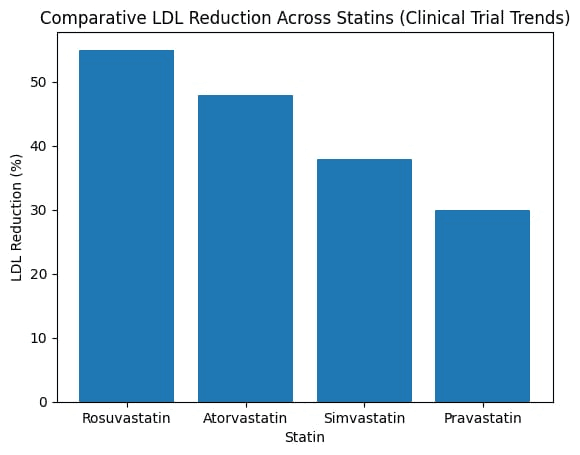
- Powerful LDL reduction (up to 55–63%)
- Significant HDL increase
- Triglyceride lowering effect
- Long half-life (19 hours) for sustained action
- Minimal CYP450 metabolism resulting in fewer drug interactions
Mechanism of Action
Rosuvastatin works by inhibiting HMG-CoA reductase, a key enzyme involved in cholesterol synthesis within the liver.
How Rosuvastatin Works
- Reduces cholesterol synthesis in the liver
- Increases LDL receptor activity
- Enhances clearance of LDL cholesterol from bloodstream
Clinical Evidence & Outcomes
Multiple large-scale clinical trials have demonstrated the effectiveness of Rosuvastatin in reducing cardiovascular events and improving long-term outcomes.
- Reduces major cardiovascular events
- Slows progression of atherosclerosis
- Provides plaque stabilization
- Supports aggressive LDL reduction strategies
- Improves long-term survival outcomes
Safety & Tolerability
Rosuvastatin is generally well tolerated in most patients when used appropriately under medical supervision.
Common Side Effects
- Myalgia
- Mild liver enzyme elevation
- Headache
Recommended Monitoring
- Liver function tests
- Lipid profile assessment after 4–6 weeks
- CK levels if muscle-related symptoms occur
Position in Current Guidelines
International cardiovascular guidelines strongly recommend high-intensity statins like Rosuvastatin for patients at elevated cardiovascular risk.
Target LDL Goals
- <70 mg/dL for high-risk patients
- <55 mg/dL for very high-risk patients
Conclusion
Rosuvastatin has transformed dyslipidemia management through its potent lipid-lowering action, proven cardiovascular protection, and favorable tolerability profile. As cardiovascular disease continues to rise globally, Rosuvastatin remains a cornerstone therapy for reducing long-term cardiovascular risk and improving patient outcomes.
Curasent Medical Team
Pharmaceutical Research & Clinical Affairs
The Curasent Healthcare medical team is dedicated to providing accurate, evidence-based health information to empower better healthcare decisions for patients and professionals alike.
Have questions about this topic?
Our medical team is here to help you.